What makes a good board wood?
Four things, and a timber needs all of them.
- Hard‑wearing. Dense enough to shrug off years of daily use without going soft or furry.
- Kind to knives. Hard, but not so hard that it dulls a blade. The best board woods sit in a sweet spot.
- Close‑grained. Tight, fine pores give food and bacteria nowhere to hide, and the surface stays smoother for longer.
- Food‑safe. No natural toxins or strong resins. Some timbers are lovely to look at and shouldn’t go anywhere near food — here’s which ones.
The timbers I use
Oak
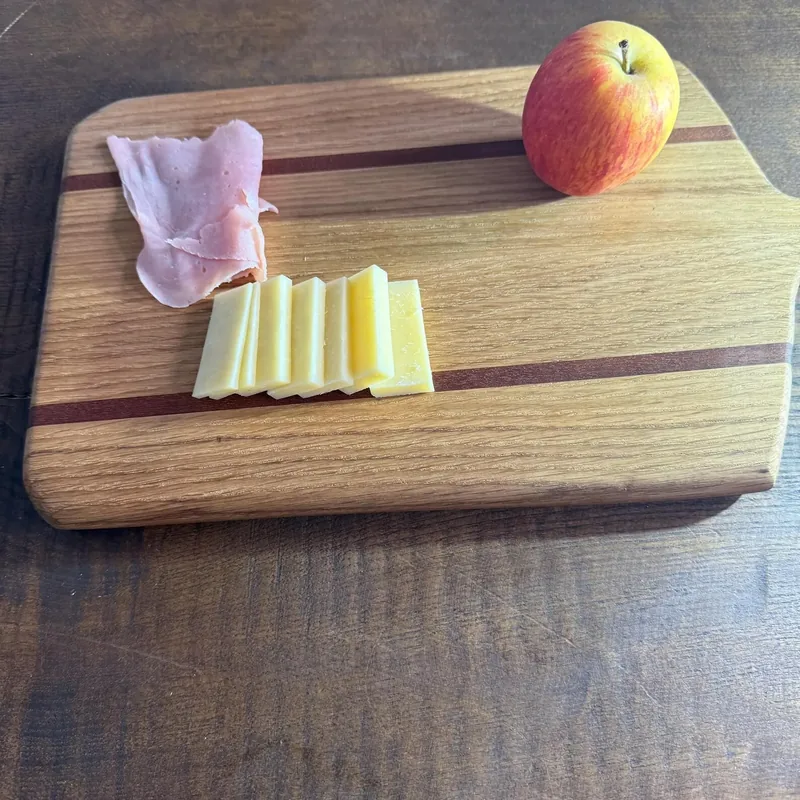
A British classic. Strong character, beautiful figure, and that unmistakable open grain. Hard‑wearing, and ideal for serving and cheese boards — just keep it oiled, because the open pores drink moisture.
Serving · cheeseSapele
A rich, reddish hardwood related to mahogany. Dense and very stable, so it stays flat. I pair it with oak in the charcuterie boards for the contrast — the two stripes you see are sapele.
Serving · contrastMaple
My first choice for a board you actually chop on. Hard, pale and very close‑grained, so it resists knife marks and is gentle on the blade. Clean, calm and easy to live with.
Chopping · everydayBeech
The traditional European kitchen timber for good reason. Smooth, durable and close‑grained, it takes a beating without harming a knife edge. Also what I use for mortar bowls.
Chopping · pestle & mortarAsh
Pale, springy and full of character — but with a more open grain, it’s better for decorative and serving pieces than heavy daily chopping. Most of my bowls and twig vases are ash.
Serving · bowlsEnd grain vs edge grain
End‑grain boards — the chequerboard look — are built from blocks with the wood fibres standing upright. A knife slides between the fibres rather than cutting across them, so the board hides marks well and is very durable. They’re also heavier, use a lot more timber, and cost considerably more.
Edge‑grain boards show the long grain running across the face. They’re lighter, more stable, easier to keep flat, and excellent value. Looked after properly — washed, dried on edge, oiled — an edge‑grain board in a good hardwood will give decades of service. That’s what I make.
Grain direction matters more than you might think
A well‑made edge‑grain board in a good hardwood will outlast a poorly‑made end‑grain one.
Construction and care matter as much as the species on the label. Look for straight grain, tight glue lines and a proper oil finish before you worry about which timber it is.
Frequently asked questions
Is oak good for a chopping board?
Yes — hard‑wearing and beautiful. Its open grain does mean it needs oiling a little more often than maple or beech, so it suits serving and cheese boards especially well.
What is the most hygienic wood for a chopping board?
Close‑grained hardwoods like maple and beech give bacteria the least to cling to. That said, any wooden board is naturally antibacterial when it’s kept clean, dry and oiled.
End grain or edge grain — which should I buy?
End grain hides knife marks best but costs more and weighs more. Edge grain is lighter, more stable and better value. Both perform well with proper care; for most kitchens, edge grain is the sensible choice.