What ‘food safe’ means for wood
A wooden board, bowl or spoon is safe for food when three things are true.
- The species is benign. No natural toxins, no strong resins that taint food, and not a known skin sensitiser.
- The structure suits the job. Dense and close‑grained, so food and moisture can’t pack into open pores and the surface stays smooth.
- The finish and any glue are food safe. A board is only as safe as whatever is on it and holding it together.
Safe, well‑proven timbers
These have been used for kitchenware for generations:
- Maple and beech — hard, pale and very close‑grained; the classic chopping‑board and utensil woods, and what my pestle‑and‑mortar sets are made from.
- Cherry and walnut — close‑grained and beautiful; excellent for boards, bowls and spoons.
- Sycamore — the traditional British dairy wood, used for butter pats, bread boards and scrubbed kitchen tables because it doesn’t taint food.
- Oak — perfectly food safe; wine and whisky have been aged in it for centuries. The grain is open, so keep it oiled; it’s ideal for serving and cheese boards.
- Ash — tough and springy, with a more open grain; best for serving pieces and bowls.
- Sapele — a dense, stable hardwood related to mahogany; the dark stripes in my charcuterie boards.
- Olive — very dense and oily, with striking figure; lovely for boards and spoons.
Which of these makes the best board is a different question — that guide is here.
For a finished piece rather than a timber project, my oak and sapele serving board puts two of these hardwoods to work. The product page explains the construction and finish.
Woods to avoid
- Yew. Beautiful, and toxic. Keep it for ornaments, never for anything that touches food.
- Resinous softwoods such as pine and spruce. They can taint food with a resin taste, and they’re soft enough to scar deeply under a knife.
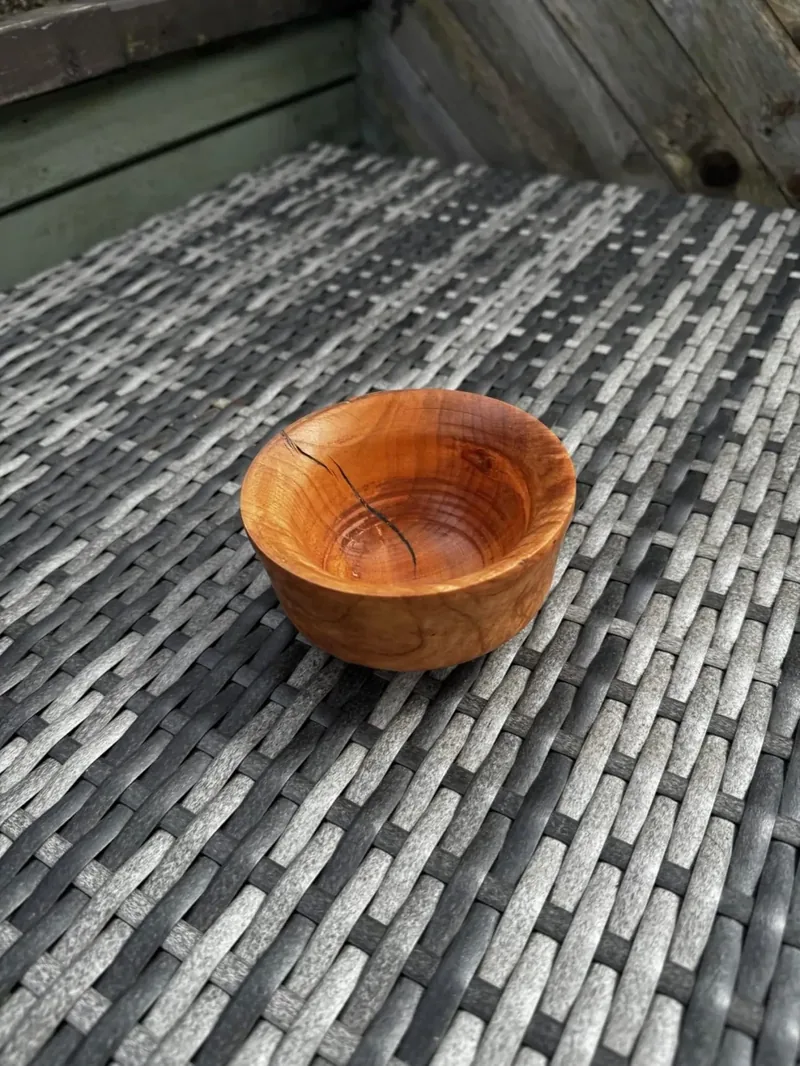
- Spalted wood. The dramatic dark lines are made by fungus working through the timber. Wonderful for decorative bowls; best kept away from food.
- Strong sensitisers — some exotic timbers such as cocobolo and other rosewoods cause allergic reactions in some people. Not worth the risk for kitchenware.
- Man‑made boards — MDF, chipboard and most plywood are held together with glues and resins that aren’t meant for food contact.
- Anything treated, painted or of unknown history — see below.
About pallet wood
Lovely for a planter. Not for a chopping board.
Pallets carry an IPPC stamp: HT means heat‑treated, but MB means fumigated with methyl bromide. And whatever the stamp, you rarely know what was carried or spilled on it. Keep pallet timber for projects that never touch food.
Reclaimed and storm‑felled wood
A lot of what I turn comes from trees that came down in storms or had to be felled — the ash vases came from a tree brought down by Storm Agnes. Wood like that is simply fresh timber that happened to fall rather than be cut. For food use it’s no different from a plank from a timber yard, as long as the species is a safe one.
Reclaimed timber — old furniture, flooring, beams, fence posts — is where you need to be careful. Old finishes can contain things you don’t want near food, and outdoor timber is often pressure‑treated with preservatives. Unless you know its history, give reclaimed wood a job that keeps it away from the plate.
The finish matters as much as the wood
A food‑contact surface wants a finish that soaks in, not one that sits on top. Varnish and lacquer look smart on a table top but chip and cut into flakes on a board, so boards and bowls are finished with oil: food‑grade mineral oil, a board oil or butter, or a hardwax oil such as Odie’s Oil, which is what every piece from my workshop gets. Most hardwax oils are food safe once they’ve fully cured, so give a freshly finished piece the drying time on the tin before it meets food.
Avoid kitchen cooking oils — olive, sunflower and vegetable oil go rancid inside the wood. Which oils to use, and how. And if a board is glued up from strips, the glue should be a waterproof wood glue approved for indirect food contact.
Frequently asked questions
What wood should you not use for a chopping board?
Yew and other toxic species, resinous softwoods like pine, spalted timber, strong sensitisers such as cocobolo, man‑made boards like MDF and plywood, and anything treated, painted or of unknown history — pallets and old furniture included.
Is oak food safe?
Yes. Oak has been used for food and drink for centuries — wine and whisky are aged in oak barrels. Its grain is fairly open, so keep an oak board well oiled; it’s ideal for serving and cheese boards.
Is pallet wood safe for a chopping board?
Best not. Pallets stamped MB were fumigated with methyl bromide, and with any pallet you rarely know what was carried or spilled on it. Keep pallet wood for projects that don’t touch food.