Finding the wood
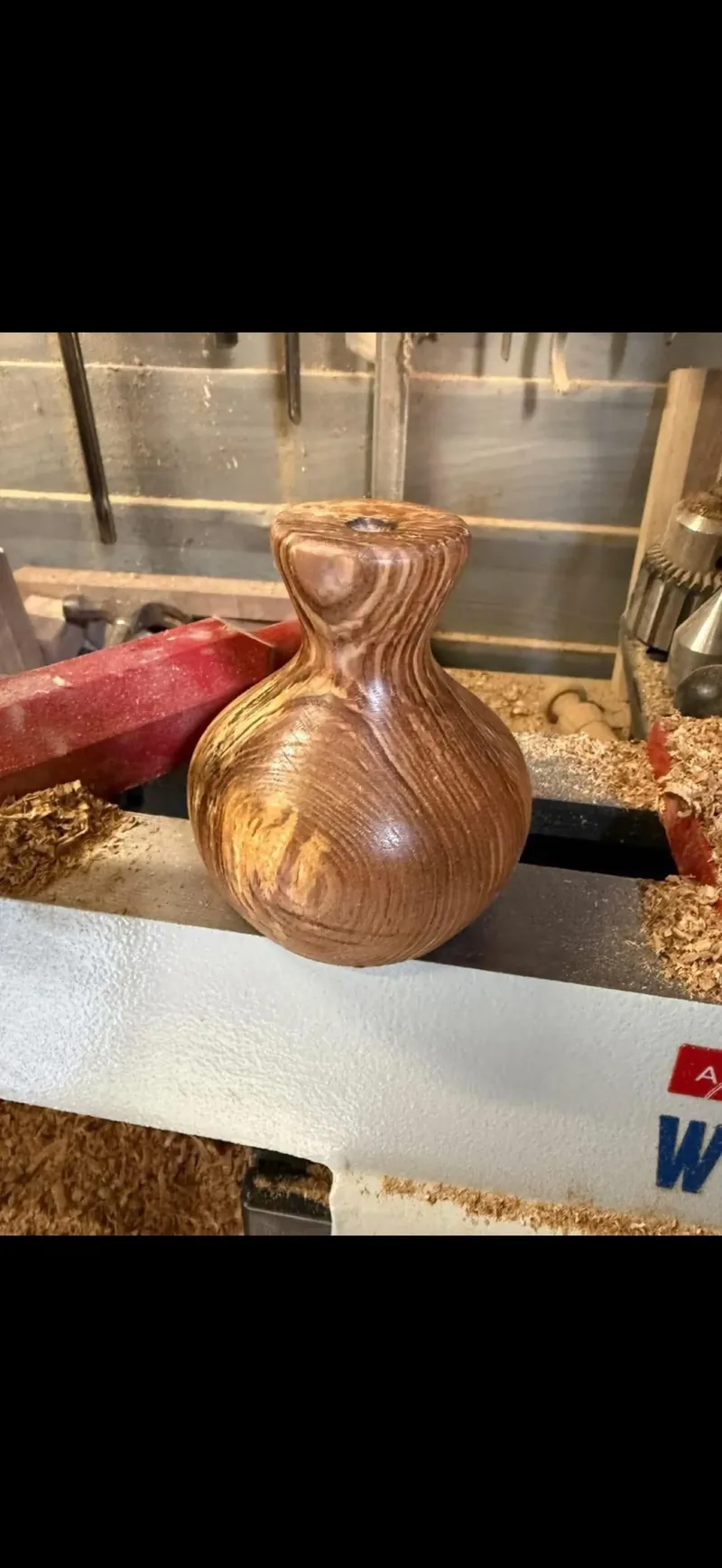
Very little of what I turn is bought as timber. Most of it is found: a storm‑felled ash — the twig vases came from a tree brought down by Storm Agnes — a cherry that had to come out of a garden, a log from a tree surgeon who would rather see it turned than chipped. Wood like that has usually grown slowly and unevenly, which is exactly where the character comes from.
Cutting the blank
A log is cut in half along its length to take out the pith — the very centre of the tree, which almost always cracks — and each half becomes a bowl blank. I mark out the largest circle the half‑log allows, cut it round on the bandsaw, and mount it on the lathe. At this stage it’s heavy, wet and rough, and a long way from a bowl.
Roughing out
Green wood turns beautifully — it comes off the tool in long ribbons — so the outside of the bowl is shaped first, then the inside hollowed, leaving the walls deliberately thick. This rough bowl isn’t finished; it’s a bowl‑shaped piece of wood that now needs to dry.
Why not turn it thin straight away?
Because wet wood moves as it dries.
A thin bowl turned wet will warp into an oval, and often split. Turning it thick, letting it dry, then turning it again is how a bowl ends up round, stable and crack‑free.
Drying — the slow part
The rough bowl goes on a shelf, out of the sun and away from heat, and waits. Ash and cherry can take months to reach the point where they’ve stopped moving. The bowl goes slightly oval as it dries — that’s expected — and every so often I weigh it; when the weight stops dropping, the wood is ready. There is no hurrying this stage, and most of the time a bowl takes to make is simply time.
Finish turning
The dried, oval blank goes back on the lathe and is trued up round again. Now the real shape happens: the curve of the outside, the foot it will stand on, the rim, and the wall thickness — thinner for a decorative bowl, sturdier for one that will work in a kitchen. This is the part that decides whether a bowl feels right in the hand.
Sanding and oiling
Sanding goes through the grits — coarse to fine — with the lathe turning, then by hand along the grain to take out the last scratches. When the surface feels like glass and every bit of dust is gone, the bowl gets its finish: a thin coat of Odie’s Oil, rubbed in, left to soak, and buffed hard until the cloth comes away clean. The grain comes up as it goes on, and that moment never gets old.
A bowl doesn’t have to be round: this recent fruit-bowl commission has an elongated form and personalised engraving. It’s a different shape from the turned bowls described here, and a starting point for a conversation about your own piece.
The bits I keep
A bark inclusion, a crack that opened as the wood dried, a patch of colour where a branch once grew — a factory would reject all of it. I usually keep it. A crack filled with black resin becomes a seam through the grain; an inclusion left on the side of a cherry bowl becomes the reason it’s the only one like it. The wood decides half of what a bowl looks like. My job is the other half — and knowing when to leave well alone.
Frequently asked questions
How long does it take to make a wooden bowl?
The turning itself is hours; the drying between rough turning and finish turning is months. Most of the time in a bowl is simply the wood settling.
Why are wooden bowls turned twice?
Wet wood moves as it dries. Turning a bowl thick, letting it dry, then re‑turning it round is how it ends up stable and crack‑free instead of oval and split.
Where does the wood come from?
Mostly storm‑felled and reclaimed trees — the ash vases came from a tree brought down by Storm Agnes — plus logs from tree surgeons and gardens that would otherwise be burned.