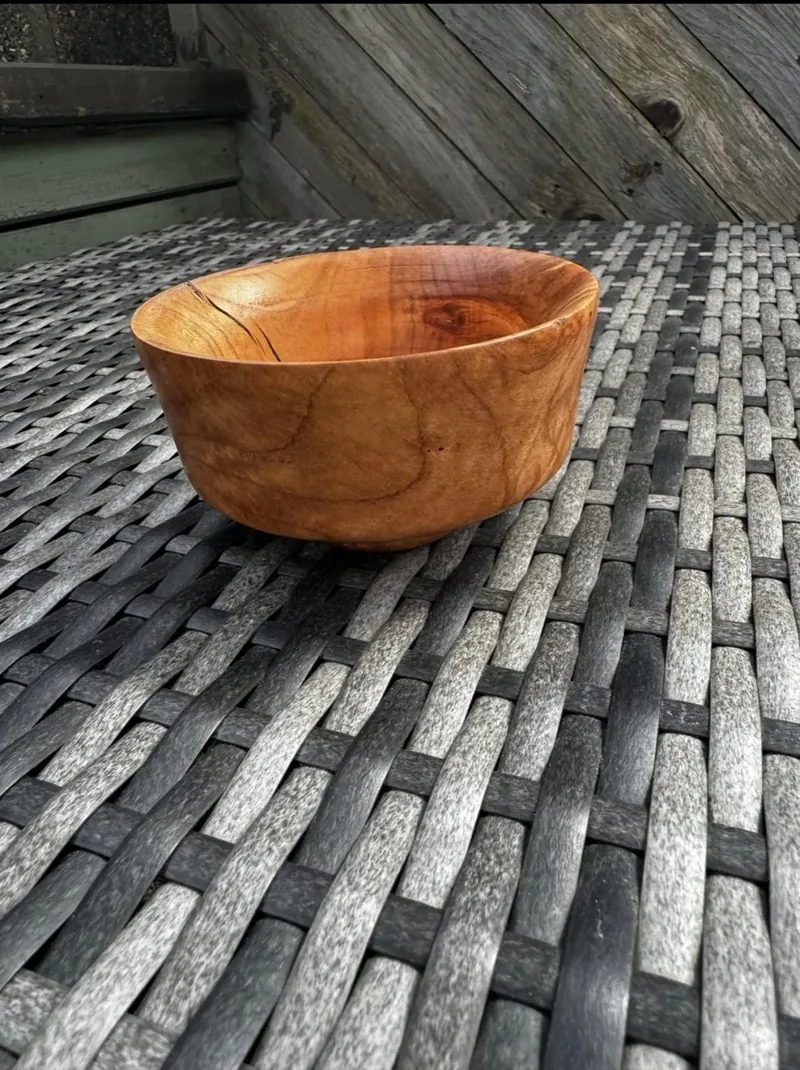
What it is
Odie’s Oil is a hardwax oil — a blend of natural oils and waxes with no solvents added. It is sold as food‑safe and non‑toxic, and it’s the sort of finish you can apply in a small workshop without a mask or a window open. Unlike a varnish or lacquer, it doesn’t form a film on top of the wood. It soaks into the surface fibres and cures there, so what you see and touch is still timber, not plastic.
Why I use it
- It’s safe on things you eat from. Boards, bowls, pestles and mortars — everything from the workshop is food‑contact, and I wanted one finish I could trust on all of it.
- It brings the grain up. Oil finishes make figure glow, and Odie’s does it without the orange tint some oils give pale woods like ash and maple.
- One coat does the job. Applied properly it needs a single coat, which on a hand‑made piece is a real advantage.
- It’s easy to live with. Nothing to chip or peel. A worn patch is just re‑oiled, and the repair is invisible.
Water‑resistant, not waterproof
No oil finish makes wood immune to soaking.
Odie’s makes water bead and run off, and it slows moisture in and out of the timber. It does not make a dishwasher survivable. Hand‑wash, dry, and the finish will last.
How it’s applied
The trick with Odie’s is how little you use. I sand the piece up through the grits until it feels like glass, wipe off every trace of dust, then rub in a very thin coat — a little goes a remarkably long way — working it into the surface. It sits for around an hour to soak in, and then the important part: I buff the whole piece hard with a clean cloth until nothing comes off on the rag. Every bit of excess has to come away, or the surface stays tacky. Done right, the piece feels dry and silky the same day, and the finish continues to cure over the following weeks.
Topping it up at home
You don’t need Odie’s Oil to look after an Odie’s‑finished piece. When a board or bowl looks pale or dry, any food‑safe board oil — mineral oil, a board butter, or a hardwax oil if you have one — will refresh it. Rub it in, let it soak, buff it off. The full oiling guide is here. If you do want to use Odie’s itself, apply it exactly as above: thin, wait, then buff until it’s completely dry to the touch.
Frequently asked questions
Is Odie’s Oil food safe?
Yes — it’s a solvent‑free blend of natural oils and waxes, sold as food‑safe and non‑toxic, which is why it’s used on every board, bowl and pestle and mortar from the workshop.
Do I need to re‑apply Odie’s Oil?
Occasionally. When the wood looks pale or dry, refresh it with a thin coat of Odie’s or any food‑safe board oil, then buff it off completely.
Can I use mineral oil on top of an Odie’s Oil finish?
Yes. Food‑grade mineral oil or a board butter will top up the finish perfectly well. Apply thinly and buff off the excess.