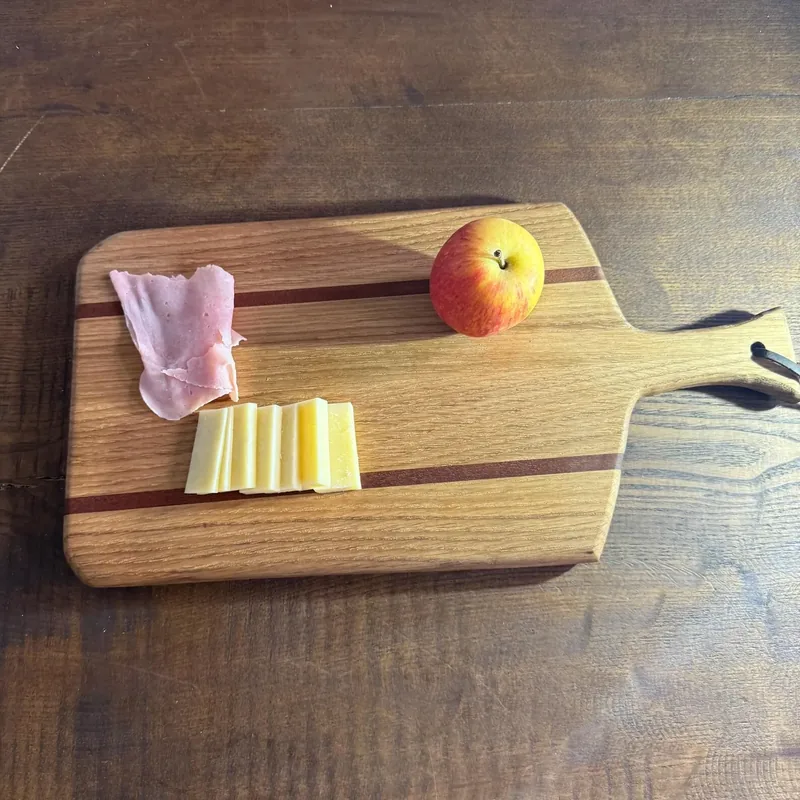
The 3‑3‑3 rule
Three cheeses, three meats, three extras. It gives you variety without a shopping list the length of your arm, and it always looks abundant.
- Three cheeses — one hard (a mature cheddar or a manchego), one soft (brie or camembert), and one with some bite (a blue, or something tangy like a goat’s cheese).
- Three meats — a salami, a cured ham such as prosciutto, and something with a bit of spice like chorizo.
- Three extras — something to carry it (crackers or sliced bread), something fresh (grapes, figs, apple), and something sweet or sharp (chutney, honey, olives or cornichons).
Building it, step by step
- Start with the bowls. Small dishes for chutney, honey or olives go down first. They anchor the layout and stop wet things wandering into dry things.
- Add the cheeses. Space them out across the board — one at each end and one in the middle — so people don’t have to reach over each other.
- Fold in the meats. Fan the salami, ruffle the prosciutto, and tuck them in loose lines between the cheeses. Folded meats take up more room and look far more generous than flat slices.
- Fill the gaps. Crackers, bread and fruit go into whatever space is left. Don’t leave bare board showing — full always looks better.
- Finish with colour. A few sprigs of rosemary or thyme, some grapes still on the stem, a scattering of nuts. This is the bit that makes it look like it took all afternoon.
Make it look generous
- Fan or fold the meats to give them height instead of laying them flat.
- Let things overlap. Gaps look mean; a crowded board looks welcoming.
- Use fruit and herbs as colour — they cost pennies and lift the whole thing.
- Take the cheeses out of the fridge half an hour before serving. Cold cheese has no flavour.
Building one for the festive season? Here’s the Christmas version — Stilton, the trimmings, and how much to buy.
The board is the centrepiece
Everything else is arranged on it — so it’s worth having one you love.
A handmade hardwood board with real grain does half the styling for you. Oak and sapele give warmth and contrast under pale cheeses; a food‑safe oil finish means you can put food straight on it without a plate in sight.
Frequently asked questions
What is the 3‑3‑3 rule for a charcuterie board?
Three cheeses, three meats and three extras. It gives variety without waste, and the board always looks full. Scale it up for a crowd by adding more of each rather than more categories.
How much charcuterie per person?
As a starter or with drinks, allow roughly 50–80 g of meat and 50–80 g of cheese per person. If the board is the main event, double it.
What size board do I need for a charcuterie board?
A medium board comfortably serves three or four people as a starter. For a bigger gathering, use two boards rather than one enormous one — it’s easier to carry, easier to reach, and looks better on the table.