Why boards warp
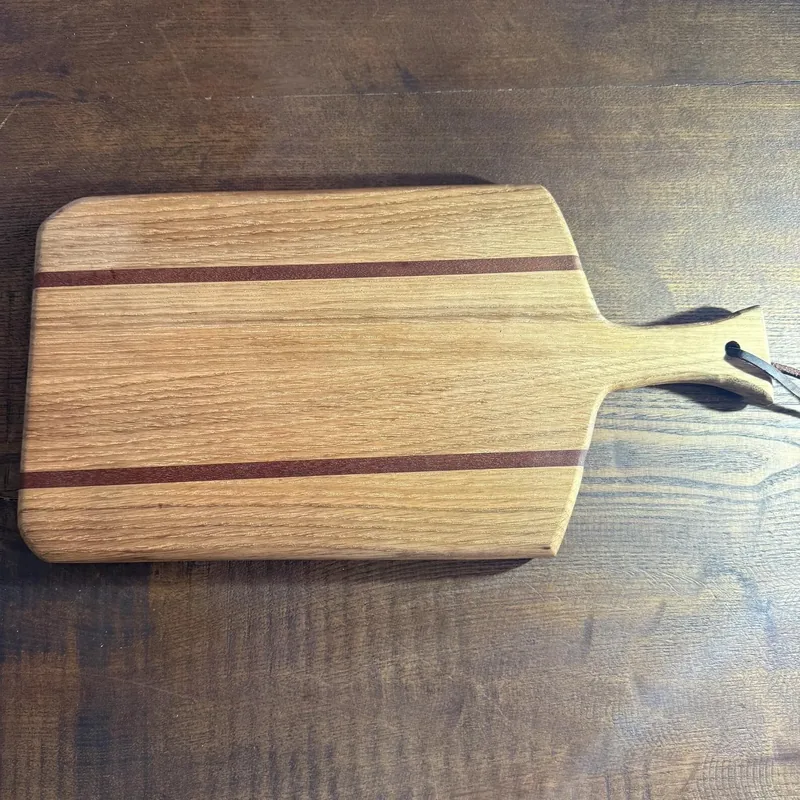
Wood moves with moisture. When one face of a board gets wetter — or dries faster — than the other, that face changes size and the board cups. Almost every warped board I’m shown was left lying flat on a wet worktop, dried against a radiator, or washed on one side only. The fix works by putting the moisture back in balance; the prevention is simply drying it on its edge.
Flattening a warped board
- Find the hollow side. Lay the board on a flat surface. The face that curves inwards — the cupped side — is the one that has dried out more.
- Dampen the hollow side. Wipe it with a wet cloth, or lay a damp tea towel on it for an hour. Don’t soak the board; you’re adding a little moisture, not flooding it.
- Weight it flat. Put the board hollow‑side down on a flat surface, damp face against a dry towel, and stack something heavy on top — a few cookbooks or a cast‑iron pan. Leave it overnight.
- Check and repeat. Most boards come back flat in a day or two. A stubborn one may need a second round.
- Oil both sides. Once it’s flat and dry, give it a generous coat of oil on every surface. Here’s how. Oil slows moisture in and out, which is what keeps it flat.
What not to do
Don’t bake it, don’t leave it on the radiator, and don’t clamp it dry.
Forcing a dry board flat is how cracks start. Add a little moisture first, use weight rather than clamps, and let it take its time.
Sanding a rough or grey board
A board that feels furry or has gone grey and dull has simply lost its oil and the surface fibres have lifted. Sand it with the grain — start around 120 grit, move to 180, finish at 240 — until it feels smooth and the colour comes back. Wipe off the dust, then oil it generously; a freshly sanded board is very thirsty, so give it two or three coats over a couple of days.
Repairing cracks and splits
- Fine surface checks — hairline lines at the ends of a board — are normal and harmless. Sand lightly and keep the board oiled; they rarely go anywhere.
- A split along a glue line can be repaired. Work a waterproof, food‑safe wood glue into the split, clamp the board across its width until the glue cures, then scrape and sand the joint flush and re‑oil.
- A crack part‑way through the board in solid timber is harder. Glue and clamp can hold it, but the crack will show and may open again with the seasons. Many people keep such a board for bread or serving rather than heavy chopping.
When to replace it
If a board has split all the way through, if a crack has gone black inside, or if it smells even after a lemon‑and‑salt scrub and a sanding, it has done its service. Everything up to that point is worth an evening’s repair — a good hardwood board is a lifetime piece, and a bit of care usually gets it there.
Frequently asked questions
Can a warped wooden chopping board be flattened?
Usually, yes. Dampen the cupped side, weight the board flat overnight, then oil both faces once it’s dry. Dry it on its edge from then on.
Is it safe to use a cracked chopping board?
Fine surface checks are harmless. A deep crack can trap food and moisture, so repair it with food‑safe glue, or keep that board for bread and serving rather than raw ingredients.
What grit sandpaper for a chopping board?
Start at 120 grit, move to 180 and finish at 240, always sanding with the grain. Then oil generously — a freshly sanded board is very thirsty.