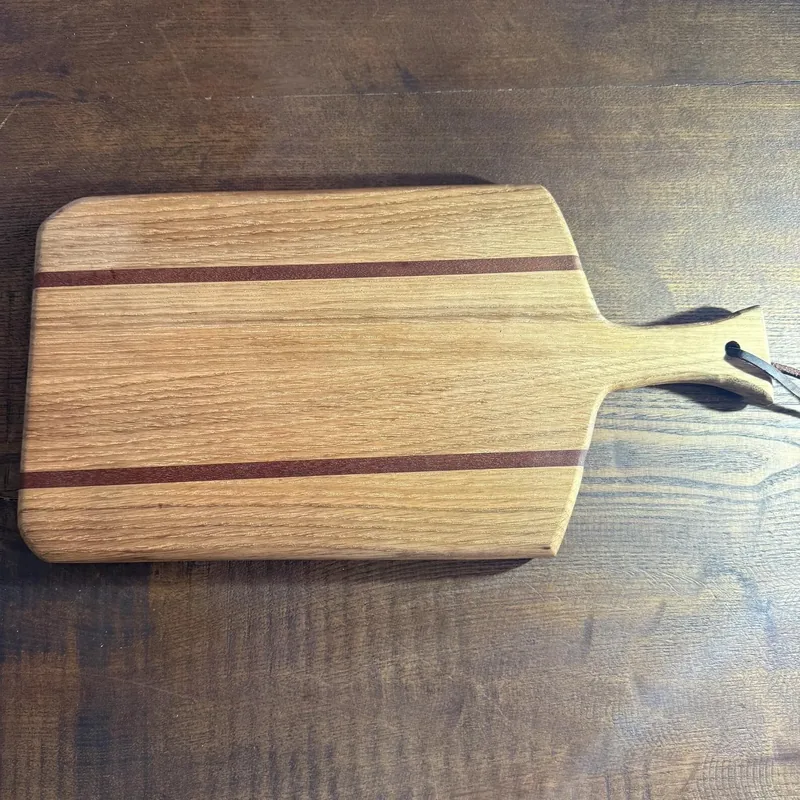
Which oil should you use?
Any oil that is food‑safe and doesn’t go rancid. That rules out most of what’s in the kitchen cupboard and leaves three good options.
- Food‑grade mineral oil. Cheap, odourless, never goes off. The traditional choice and a perfectly good one.
- Board oils and board butters. Usually mineral oil blended with beeswax or carnauba wax. The wax adds a little extra water resistance and a soft sheen.
- Hardwax oils such as Odie’s Oil. This is what I use on every piece that leaves the workshop. It’s a natural, food‑safe finish that cures in the wood rather than sitting on top of it, so it lasts longer between coats and brings the grain up beautifully. More on Odie’s Oil here.
Avoid kitchen cooking oils
Olive, sunflower, vegetable and rapeseed oil will all go rancid.
They never fully dry. Instead they oxidise inside the wood, turn sticky, and start to smell — and once that’s happened it’s very hard to get out. Save them for the frying pan.
How often to oil
The old maker’s rule is once a week for the first month, then once a month for life. That gets a new board properly saturated, and then keeps it topped up.
In practice, oil it when the board tells you to: when the colour looks dull or washed‑out, when the surface feels slightly rough, or when a splash of water soaks in instead of beading on top.
How to oil a board, step by step
- Clean and dry it first. Oil seals in whatever is already there, so start with a clean, completely dry board.
- Apply a generous coat. Use a clean cloth and work along the grain. Cover every surface — both faces, all four edges, and the handle if it has one.
- Let it soak in. A few hours is fine; overnight is better, especially for a board that hasn’t been oiled in a while.
- Buff off the excess. Wipe with a clean, dry cloth until the surface feels dry to the touch, not tacky.
- Repeat if it’s still thirsty. A very dry board will drink the first coat straight in. If it looks patchy, give it another.
Signs your board needs oiling
- The colour looks pale, dull or washed‑out.
- Water soaks in instead of beading on the surface.
- The surface feels rough or dry under your fingertips.
Frequently asked questions
Can I use olive oil or vegetable oil on a chopping board?
No. Cooking oils never fully dry — they go rancid inside the wood and leave the board sticky and smelling unpleasant. Use food‑grade mineral oil, a board oil or butter, or a hardwax oil like Odie’s Oil.
How long does a board take to dry after oiling?
A few hours for mineral oil and most board oils. Give a very dry board overnight, then buff off anything that hasn’t soaked in.
What oil does Eddy use?
Odie’s Oil — a natural, food‑safe hardwax oil. Every board, bowl and pestle‑and‑mortar set from the workshop is finished with it.