Granite
Unpolished granite is the grinder’s choice. It’s very hard and very heavy, and its rough inside surface gives spices something to break against, so it turns whole seeds and peppercorns to powder quickly and pounds a Thai curry paste smooth. If you make pastes from scratch every week, it’s hard to beat.
The trade‑offs are weight — a good granite mortar is heavy enough to think twice about lifting — and noise. It’s loud on a worktop, it can chip if it’s knocked, and it can mark whatever it’s put down on. It also needs seasoning with rice before first use, just like wood.
Marble
Marble looks the part, and a polished marble mortar is lovely for soft, wet mixtures — it’s the traditional mortar for Genoese pesto. But polished marble is smooth, so it grips hard spices less well than granite, and marble is a softer, more porous stone than it looks.
Its real weakness is acid. Marble reacts with lemon juice, vinegar and even tomato, which dulls and etches the surface, and bright spices like turmeric can stain it. If you like to finish a paste with a squeeze of lime in the mortar, marble will show it.
Wood
A wooden pestle and mortar is lighter, quieter and warmer to use. It won’t chip, it won’t scratch the worktop, and it doesn’t react with acids. It’s at its best crushing and mixing: garlic to a paste with a pinch of salt, bruising herbs, cracking peppercorns, grinding softer seeds such as cumin, coriander and fennel, making salt rubs, dressings and pesto. The traditional Italian pairing is a marble mortar with a wooden pestle for exactly that reason — wood crushes basil rather than tearing it.
What wood isn’t best at is milling hard spices — cinnamon bark, cloves, dried chillies — to a fine powder. It will get there, but granite or a spice grinder is quicker. Wood is also porous, so it takes on flavours over time; many cooks keep one for savoury and one for sweet, and it should never be washed with soap. Here’s how to season and care for one.
Which timber?
Dense, close‑grained hardwoods, nothing else.
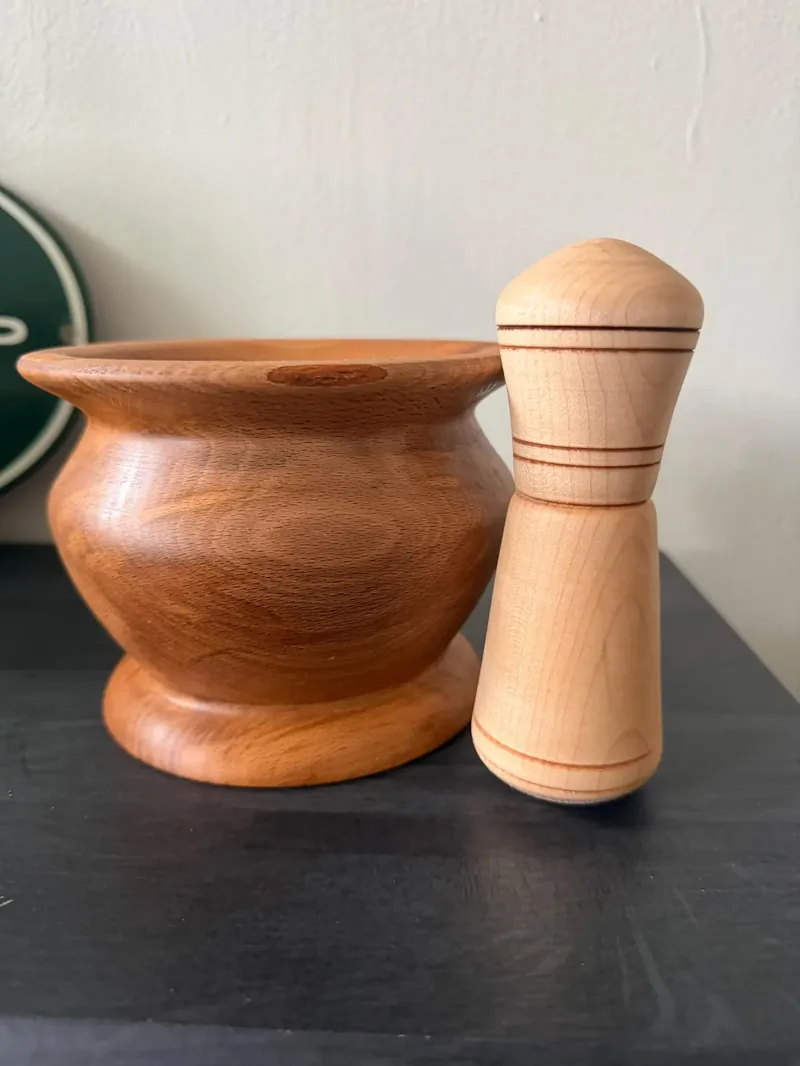
A mortar takes a pounding, so the wood needs to be hard and fine‑grained. My sets pair a beech mortar with a maple pestle — both are traditional European kitchen timbers, tough and food‑safe. More on which woods are safe for food.
If wood sounds right for your kitchen, take a look at the maple and beech set I make. Check the listing for current availability.
At a glance
Granite
Best for fine spice powders and curry pastes. Heavy, loud, can chip. Handles acid well.
Grinding · pastesMarble
Best for pesto and soft mixtures. Smart on the table, but etched by acids and stained by strong spices.
Pesto · soft mixesWood
Best for garlic, herbs, seeds, rubs and dressings. Light, quiet, kind to the worktop. Slower on hard spices; no soap.
Crushing · everydayWhich should you buy?
- You mostly crush garlic, herbs and seeds, or make dressings and rubs: wood. It’ll live on the worktop and get used every day.
- You make curry pastes or grind whole spices to powder every week: granite.
- You make a lot of pesto: marble with a wooden pestle, or an all‑wood set.
- It’s a gift: wood. It’s the one that looks good out on the side, is easy to live with, and nobody has to find space for a stone the weight of a bowling ball.
Frequently asked questions
Is a wooden pestle and mortar any good?
Yes — for crushing garlic, bruising herbs, cracking peppercorns, grinding softer seeds like cumin and coriander, and making rubs, dressings and pesto. It’s light, quiet and won’t chip. For milling hard spices to a fine powder, granite is quicker.
Can you grind spices in a wooden pestle and mortar?
Softer seeds such as cumin, coriander and fennel grind well, and peppercorns crack easily. Very hard spices like cinnamon bark and cloves are slower to powder in wood than in granite or a spice grinder.
Why shouldn’t you use lemon juice in a marble mortar?
Marble reacts with acids. Lemon juice, vinegar and tomato dull and etch its surface, so add acidic ingredients after the grinding is done, or use a wooden or granite mortar instead.